Sunday, November 10, 2013

Fibroadenoma Versus Phyllodes Tumor of the Breast

Fibroadenoma 
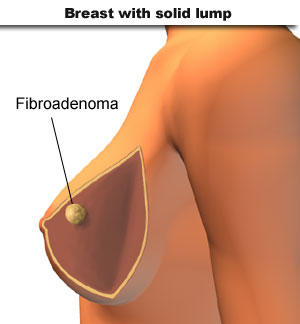
Fibroadenoma is the most common benign tumor in the female breast. They generally occur in younger women but can be seen in post-menopausal women as well. Most of the time they present as a lump in the breast, but they can also be found incidentally on a breast radiology exam.
To a pathologist, a fibroadenoma has two components: the stroma (or "fibro" part), and the breast ductal epithelium (the "adenoma" part). The usual fibroadenoma is benign and does not increase a patient's risk for developing breast cancer. However, the epithelial component can undergo the same changes the rest of the breast epithelium does so that hyperplasia, atypical hyperplasia, and carcinoma can grow within fibroadenomas. When the stroma part of a fibroadenoma changes, then pathologists worry about what is called a phyllodes tumor.
Phyllodes Tumor
This tumor is a much more rare type of tumor than fibroadenoma and they generally are seen in a some what older age group than fibroadenomas. Like fibroadenomas, the tumors are composed of a mixture of stroma and epithelium; however, it is the stroma that distinguishes phyllodes tumors from fibroadenomas.
Since these are uncommon tumors in the breast, there are not a lot of large research studies on phyllodes tumors. Generally, pathologists break them down into three different types: benign, border line, and malignant based upon how aggressive the stroma looks under the microscope. All phyllodes tumors, regardless of sub classification, can recur and generally the rate of recurrence increases from benign to borderline to malignant. Most surgeons will try to get a margin of "normal" breast tissue around a phyllodes tumor to reduce the change of the tumor coming back. Phyllodes tumor rarely metastasize and it's usually the malignant variant that does so.
Because these are uncommon tumors, pathologists who don't see a lot of breast pathology may have difficult making the diagnosis. A benign tumor can sometimes be confused with a fibroadenoma, and a more aggressive (malignant) tumor can be confused with a metaplastic carcinoma. Thus, it is important that if there is any question about whether or not you have a typical fibroadenoma or possibly a more aggressive tumor, you should seek a second opinion.
For more information on breast pathology, visit SBPC
2009 Seattle Breast Pathology Consultants, LLC. All rights reserved.
Thomas J. Lawton MD


Article Source: http://EzineArticles.com/3526705

Saturday, November 9, 2013

Hypnosis For Weight Loss - A DIY Guide!

Lets be clear about this. What you do is controlled by your brain. The mind is in charge of the body. This is a simple concept that we all understand. When it comes to achieving goals however we can often be sidetracked into being concerned with external factors that we have little or no control over. Often people wanting to lose weight will blame their genetics, or their bone structure, or their hormones, or some other health factor that we have little control over. These are simply a distraction. In life we all have to work with what we have now, not how we wish things were. In fact, it is better to stop the 'blame game' entirely. Blaming ourselves, others, the world, etc. is most likely completely unproductive as well as draining and demotivating.
What is key is recognising that in order to achieve new goals we need to change our actions, and changing our actions can only be done by changing our mind.
Note that I am not just talking about changing what we think. Yes, this is important, but far more important is changing our subconscious drives. Our behaviour is directly driven by the emotional/subconscious mind. This fact was recognised by all the early psychiatrists and neurologists like Freud, Charcot and Jung.
Freud compared the mind to an iceberg with the smallest visible part compared to the conscious mind, and the deeper, larger, driving part of our mind being hidden beneath the surface.
Given that it is the subconscious mind that drives behaviour and that behavioural change is what is needed for new goals, how do we access that part of the mind?
Hypnosis. This is the key. Now hypnosis can be done formally with the help of a qualified hypnotherapist or you can use it yourself. There are several aspects of hypnosis that should be achieved:
1. Relaxation. This allows the 'critical facility' of the pre frontal cortex to be quietened. Slowing down the critical facility means that changes are more likely to be accepted into the deeper regions of the mind.
2. Visualisation/emotional recall. Purposefully triggering emotions or triggering visualisations that are connected with emotional states allows us to directly manipulate the emotional 'subconscious' mind.
3. Hypnotic suggestion. The best forms of suggestion, including hypnotic suggestion for weight loss, are done by a second party. Suggestions that are delievered by someone else are usually more effective than suggestions you give yourself. However autosuggestion (giving yourself suggestions) that you really can believe in is also effective.
Whether it is hypnosis for weight loss, hypnosis for depression, performance or motivation it doesn't really matter. Follow the simple steps below:
1. Relax in a comfortable position. It can be either sitting or lying. Then close your eyes.
2. Starting with your toes, clench and relax progressively every muscle group in your body until you reach the top of your head. As far as you can, focus on each muscle group. Especially notice the muscles in your abdomen.
3. As you release the muscles in your abdomen, take three slow deep breaths ensuring that your abdomen rises and falls. Do not breathe from your chest. This is the time to let it 'all hang out'.
4. Breathe normally and continue the relaxation process. Remember to clench and relax the shoulders, neck, upper arms, lower arms and hands.
5. Remember to relax the muscles of the face and jaw if necessary by clenching them first.
6. Mentally scan your body and re-relax any areas that you need to.
7. Introduce mental relaxation by imaging any worrying thoughts or nagging thoughts disappearing. You might like to image them floating away or disappearing into a mist or being breathed out with every out breath.
8. Visualise a favourite place. This can be a place from your memory or a place you can create in your imagination. It should be somewhere you feel relaxed and safe. Spend some time visualising each element that exists in this place - the floor, the walls, the view et cetera. Importantly also imagine the feeling of being there.
9. Recall the old feeling, the one you want to move away from. It could be a feeling of craving junk food, or it could be a feeling of dissatisfaction with a small meal, or it could be a feeling of anxiety that belies the secondary feelings. Think about what the feeling is that really drives your behaviours; then recall it. Just feel it for a few moments if you can, and now SWITCH as quickly as you can to a replacement feeling. The replacement feeling will be one of contentment, fullness, relaxation, achievement or success. Invoke a pleasant memory or imagined scenario to create the new emotion. Do this process a minimum of three times.
10. Recall any unhelpful 'old' thoughts. Replace them with a new, more helpful thoughts. For example replace 'It's OK to have one more' with 'I have the right to chose what I put in my body' or 'I am chosing to be in control'. Say the new thought to yourself and experience as much as possible the new feelings that are associated with this new, more balanced approach. You might imagine erasing the old thoughts by rubbing them off a chalk board. Do this a minimum of three times with each unhelpful thought you have identified.
11. Anchor the new feeling and thoughts by performing some movement like pressing together the thumb and forefinger. Alternatively you could pay extra attention to the relaxation in a specific part of your body. You could also recalling a piece of music or say a phrase in your mind that reminds you of this state.
12. Recall the old behaviour. Really imagine it as much as you can, like it was a scene on tv or a movie screen. Now imagine you had a rewind button. Hit rewind to get back to the beginning of the scene and then play events forward again, this time with the new behaviour. Again do this a minimum of three times.
13. Say to yourself 'this old problem is fading, every day I move further and further away from the old behaviours and old feeligns' 'I am creating a new destiny'.
14. When you are ready, gently come back to a normal state of awareness and open your eyes.
This whole process should take somewhere between about 10 and about 30 minutes.
When you have practised this a few times use the anchor that you created (the touch of the thumb and forefinger, or relaxation in part of your body or the phrase) whenever you need to feel and think the way that you planned. Make sure the thoughts and emotions are enough to overcome the situation; if they are not then you will need to practise the self hypnosis more often or get professional help.
I recommend that you practice this procedure around once a day for a week and then about once or twice a week until you are confident that the new thoughts, feelings and behaviour are firmly installed.
Changing your thoughts, feelings and actions through hypnosis is easy once you have practiced it a few times.
Best wishes in achieving your full potential!
To learn more about hypnosis for weight loss or hypnotherapy for anxiety, hypnotherapy for goal achievement or virtually anything else see the website: http://www.hypnosisparramatta.com.au/weight-loss-hypnosis-sydney/


Article Source: http://EzineArticles.com/7731936

Friday, November 8, 2013

Frequently Asked Questions About Sleep Apnea

Many people experience some occasional difficulty sleeping and/or daytime fatigue. But how does a person know if he or she has a temporary sleep problem that can be remedied with some simple behavioral changes, or if it is a legitimate disorder such as sleep apnea that should be diagnosed and treated properly? Here are some "frequently asked questions" about sleep apnea (SA) to help you decide.
If you think you do have a legitimate sleep disorder, see a doctor who specializes in sleep apnea and other sleep disorders to be properly tested, diagnosed and treated.
Q. What exactly is sleep apnea?
A. SA is a breathing disorder that causes a person's breathing during sleep to be paused and/or shallow. The pauses generally last 10 to 20 seconds, and in severe cases, can occur hundreds of times a night. With obstructive sleep apnea, the airway is blocked and/or collapses while sleeping. Air squeezing by the blockage can cause loud snoring and interrupted sleep.
As a result of the paused breathing and/or snoring, many sleep apnea sufferers sleep are woken up throughout the night and spend more time in light sleep, rather than deep, restful REM (rapid eye movement) sleep. This chronic sleep deprivation results in daytime sleepiness, and can negatively affect job performance, mood, reflexes and concentration.
Over time, untreated sleep apnea can also lead to cardiovascular health problems, such as high blood pressure, heart disease, stroke, as well as weight gain and diabetes.
Q. What are some common symptoms of SA?
A. Some common symptoms of SA include trouble falling asleep at night, waking throughout the night, chronic snoring, paused breathing during sleep, morning headaches, excessive daytime sleepiness and irritability, poor memory and performance during the day. Increased blood pressure and depression are additional signs that you may have sleep apnea.
Q. How is sleep apnea treated?
A. There are many new, non-invasive and surgical treatments available today.
  • The Provent Device: Featuring an innovative MicroValve technology, this device provides discreet comfort and uses the power of your own breathing to restore natural airflow. It's small and powered by your own breathing, so it doesn't require a machine.
  • The Pillar Procedure is available for the treatment of snoring and mild to moderate symptoms of obstructive sleep apnea. Performed in-office in about fifteen minutes under local anesthesia, three small polyester rods are implanted in the soft palate of the patient's throat. The inserts lend support to the soft palate, and over time the body's natural fibrotic response stiffens the upper keeping it from totally relaxing when you sleep.
  • Continuous Positive Airway Pressure (CPAP) is an older, but reliable treatment that uses mild air pressure to keep the breathing passages open. CPAP machines help many people with obstructive sleep apnea sleep better at night by preventing airways from collapsing or blocking, thus reducing or eliminating snoring and frequent waking during the night by pumping a continuous flow of air into the nasal passages, keeping the airway open, and preventing or greatly reducing snoring and paused breathing. There are many different CPAP on the market, and a respiratory therapist will help choose a quiet machine with a comfortable mask that fits you well.
  • Bi-level Positive Airway Pressure (Bi PAP). A similar device to the CPAP, the Bi PAP delivers pressurized air flow only during the inspiration. Proper fit of the nasal mask by a respiratory therapist is necessary, and appropriate air pressure settings will be established for each individual. The units are portable and may be used when traveling.
  • Surgical procedures: After other sleep apnea treatments have been considered and tried, surgical intervention is an addition option for the treatment of obstructive sleep apnea.
Q. Who is at risk for developing SA?
A. While SA is more common in adult men, OSA increases in women after age 50 and young children have been known to have it as well. Being overweight is a risk factor for all ages.
Q. Are women at risk for SA as much as men?
A. While men are generally more likely to suffer from obstructive sleep apnea (OSA), many more women than previously thought suffer from OSA, and leaving it unchecked can have dire consequences on a woman's cardiovascular health. According to the National Sleep Foundation, one in four women over age 65 have SA. Being overweight also increases a woman's risk of having SA. Menopausal women are three and a half times more likely to get OSA, possibly due to reduced amounts of progesterone
A recent women and sleep apnea study conducted by Dr. Francisco Campos-Rodriguez, director of the sleep-disordered breathing unit at Valme University Hospital in Seville, Spain, states that women with untreated severe OSA are three and a half times more likely to die from cardiovascular disease than women without OSA. However, the study also showed that women who treat their severe sleep apnea at night with a technique called continuous positive airway pressure (CPAP) significantly reduce their risk of heart attack-related deaths to about the same risk level as women without OSA.
Q. What are some common side effects of untreated SA?
A. Untreated SA, and the paused breathing that causes waking through the night, not only prevents deep, restorative sleep, it can also lead to myriad side effects and medical problems, from daytime sleepiness and reduced job performance to hypertension, heart disease, mood and memory problems.
David Volpi, M.D., P.C., F.A.C.S. is a board-certified otolaryngology surgeon with Ear, Nose and Throat practices, Otolaryngology Associates, on the Upper West Side and Upper East Side and is a staff member of the best teaching hospitals New York City. David Volpi, M.D. realized that there is a lack of information on the part of the public about the potential severity of snoring. With the need for accurate information, diagnosis and treatment so necessary, he founded Eos Sleep, formerly Manhattan Snoring and Sleep Center to be a place where snoring patients can go for total, expert treatment -- and he created this site to be a thorough information resource for the education of snoring sufferers throughout the world.
For more information, visit http://www.eossleep.com.


Article Source: http://EzineArticles.com/7185253

Thursday, November 7, 2013

Guillain-Barre Syndrome


The medical problem called Guillain-Barre Syndrome (GBS) is a rare and uncommon disorder which causes the immune system to attack the peripheral nervous system or the PNS in short. The Whole body depends on the spinal cord and the spinal cord relies on the PNS nerves and brains to transmit signals and commands. Damage to these nerves effects in the transmission of signals which results in the muscles having trouble in responding to the brain and causes paralysis in the lower body area which gradually moves towards the upper limb and face. In the long run, the patient loses all the reflexes and the whole body becomes paralyzed.
No matter whatever scientific advancements we have had, the causes of this syndrome are not known. What scientists only know is that the immune system starts to attack the body itself. It is called a syndrome instead of disease as the scientific disease-causing agent involved is not known.
SYMPTOMS:
Guillain-Barre Syndrome can be quite a devastating disorder because of its sudden and fast onset. The stage of greatest weakness can be felt within the first two weeks after the symptoms are seen. In some cases 90% of the body is affected immediately by the third week. It may take a few weeks or years to be relieved, but most patients still have a residual weakness even after three years.
This syndrome can be a life-threatening disorder if timely medical treatment is not given. Although it may be fatal and complicated, there are many symptoms and signs to detect the disorder in the beginning. The primary result of this syndrome is minor paralysis including loss of appetite, stomach ache, migraines, low fevers and chills. Some patients also feel regular exhaustion, tiredness, loss of energy and pain, which is similar to the one you get after exercises or hard labor.
TREATMENTS AND DIAGNOSIS:
Studies and researches are still going on, but as for now, there is no known cure for Guillain-Barre Syndrome. Usually, there are many other more symptoms like orthostatic hypotension, hypertension and fluctuations in blood pressure and heart beat rate. But, timely medical attention can ensure its fast recovery and lessen complications. The success rate depends on the medical results like its rate of growing paralysis, absence of fever, etc. Though we might not have the complete cure, there are some therapies that can lessen the severity and accelerate the recovery. Normally CSF and ECD are the most commonly used treatments available to confirm and cure the disease, but they usually detect the syndrome after a week or two of the initial symptoms.
Anti-inflammatory drugs and painkillers can be prescribed to offer relief during the early stages. Sometimes, doctors also prescribe the use of blood thinners to control or prevent blood clotting. Most people recover soon after treatments, which may take weeks to years.
Treatment options during the period include medicines or a plasma exchange procedure called plasmapheresis with high-dose immunoglobulin therapy. This therapy is known to reduce the severity and duration of the episode. It is the process of removing the whole blood from the body and to separate the RBC and WBC from the plasma. The RBC and WBC are then re-inserted to the patient without the plasma as the body soon replaces it again. Though this method helps in reducing the severity and duration of period, the reason is still unknown to scientists.
Most GBS patients are usually treated in intensive care wards as the treatment requires placing the patient on a respirator, heart-monitor and other machines to keep the patient's body functioning during recovery of the nervous system. This is also the most critical part of the treatment.
Though treatments are limited and the cure unknown, scientists are constantly concentrating to find out newer and more effective treatments then the existing ones. They are still studying to find out the exact cells which are responsible for the attack on the nervous system. Since, most Guillain-Barre Syndrome cases begin after viral or bacterial infections; scientists of various departments are on the process of collaboratively experimenting to find out the viruses and bacteria as believed. It is still our hope that we may, one day have a complete cure to this syndrome.
The author Javies Phaltual is an online entrepreneur dedicating most of his works on health-care. Apart from health care, some of his renowned works are cool baby clothes and best waterproof mascara.


Article Source: http://EzineArticles.com/5245272